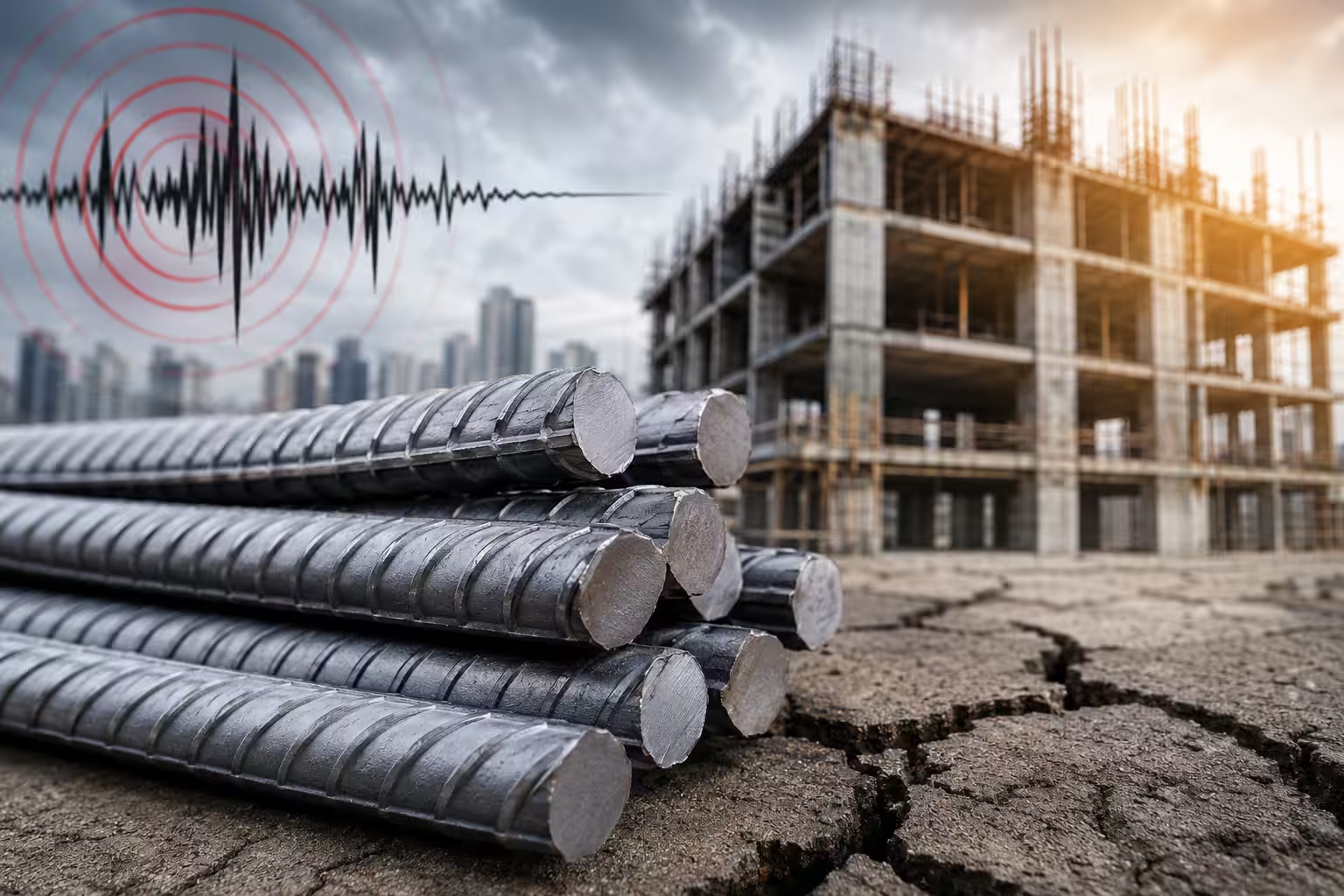
Modern construction is not about creating buildings that look good. Earthquake resistant TMT bars are really important for safety and durability. Every homeowner, builder, architect and developer should think about this. Earthquakes are very hard to predict. Can be very destructive to buildings all over the world.
No building can be completely safe from earthquakes.
Using the right construction materials can really reduce damage and make buildings more stable. Earthquake resistant TMT bars are one of the important materials for safer construction.
TMT bars are reinforcement bars that are designed to be very strong, flexible and durable. They are made in a way that helps buildings absorb and distribute the forces of an earthquake. This guide will tell you everything you need to know about earthquake TMT bars, including their features, benefits and how to choose the right ones.
Understanding earthquakes and how they affect buildings
Earthquakes make the ground move suddenly which creates waves that can be very destructive to buildings. If buildings are not designed to handle these forces they can crack, become unstable or even collapse.
Traditional buildings often fail because they are too rigid and cannot bend or absorb the forces of an earthquake. This is where earthquake resistant TMT bars come in. They are made to be flexible and strong which helps buildings withstand earthquakes.
So what are earthquake TMT bars?
They are reinforcement steel bars that are designed to provide both high strength and superior flexibility. They are made using a process that involves hot rolling, rapid water cooling, self-tempering and atmospheric cooling. This process creates an outer layer and a soft ductile core that enables buildings to withstand earthquakes.
Earthquake-resistant construction is not about preventing movement. About controlling flexibility absorbing energy and reducing damage. Earthquake resistant TMT bars act as reinforcement inside concrete which handles compression well while the steel reinforcement handles tension. During earthquakes tension forces increase significantly. Earthquake resistant TMT bars help maintain structural integrity.
The key features of earthquake TMT bars
It include high ductility, superior strength, better elongation, strong bonding with concrete, corrosion resistance and thermal stability. Ductility allows steel to bend under stress without breaking, which enables structures to absorb shocks.
Earthquake resistant TMT bars work during activity by absorbing and distributing energy, which dramatically improves occupant safety. The benefits of using earthquake TMT bars include improved structural safety, longer building lifespan, cost efficiency, reduced repair costs and better load distribution.
When selecting earthquake TMT bars it is essential to evaluate yield strength, ductility index, elongation percentage, weldability and fatigue resistance. Earthquake resistant TMT bars are superior to steel bars in terms of strength, ductility, corrosion resistance, flexibility and earthquake performance.
Ductility is critical in earthquake zones because it determines whether a building survives or not. Brittle materials fail suddenly while ductile reinforcement absorbs energy, delays collapse protects occupants and reduces loss.
Earthquake resistant TMT bars have applications, including residential buildings, commercial structures, high-rise construction, bridges, industrial facilities and public infrastructure. When choosing the earthquake resistant TMT bars it is essential to check grade selection verify certifications inspect surface quality, review manufacturing standards and consider project requirements.
There are some myths about earthquake resistant TMT bars
such as the idea that stronger means more rigid or that concrete alone provides protection. However the reality is that proper flexibility is equally important and reinforcement is essential for safety.
Construction best practices for earthquake resistance include maintaining correct spacing ensuring proper cover depth using quality concrete following structural drawings avoiding poor welding and conducting inspections. The role of engineers in safety is crucial as they evaluate soil conditions, load distribution, reinforcement layouts, beam-column connections and foundation performance.
The industry is. Emerging trends in seismic construction include smart construction materials, sustainable reinforcement, performance-based design and higher precision manufacturing. Maintenance tips for reinforced structures include conducting inspections repairing cracks early preventing water penetration monitoring corrosion and maintaining drainage systems.
Builders benefit from earthquake TMT bars
They gained better customer trust, reduced liability, improved project quality and a stronger market reputation. Safe construction creates long-term value and the future of earthquake- construction will prioritize structural resilience, energy efficiency, material innovation and smart reinforcement systems.
In conclusion
earthquake resistant TMT bars represent one of the important advancements in modern structural engineering. They combine strength, flexibility, ductility and durability to help buildings respond effectively to seismic forces. Whether constructing homes, commercial buildings, bridges or infrastructure projects selecting high-quality reinforcement materials can make a difference. Investing in earthquake resistant TMT bars is not a construction decision but an investment in structural reliability long-term performance and peace of mind.
FAQ
Are earthquake TMT bars completely earthquake proof?
No they improve performance and reduce damage but cannot make buildings entirely earthquake proof.
Which TMT bar grade is commonly preferred for zones?
Ductile grades, with high elongation are often considered suitable depending on earthquake resistant TMT bars requirements.
Do earthquake resistant TMT bars increase construction costs?
Initial costs may be slightly higher. Often reduce maintenance and repair expenses.
Can earthquake resistant TMT bars be used in all types of buildings?
Yes they are widely used across commercial, industrial and infrastructure projects.
Why is ductility important?
Ductility allows structures to bend and absorb energy instead of failing suddenly.