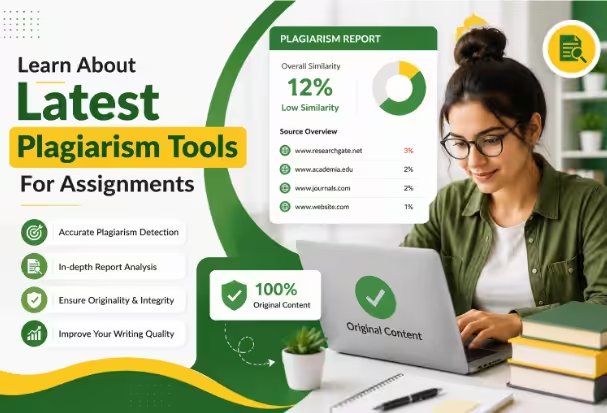
Plagiarism checkers used to do one thing well: catch copy-pasted text. That’s not enough anymore. Assignments today get scanned for AI-written sections, reworded content, even hidden formatting tricks some students use to slip past detection. If you’re submitting work anytime soon, it helps to know what these tools are actually looking for now.
This is where the latest plagiarism tools for assignments come in, not just to flag copied lines, but to show you what a similarity score really means before you hit submit. Whether you’re a student or checking a paper for someone else, the goal here is simple: understand what’s changed, and use it to your advantage.
What’s Changed In Plagiarism Checking This Year
Plagiarism tools used to focus on one thing: matching your text to something already published. That’s changed. Since early 2026, checkers like Turnitin have gotten noticeably stricter, and they’re not just comparing words anymore.
Newer updates now catch tricks some students use to lower their similarity score without actually rewriting anything, things like hidden white text, swapped characters, or replacing normal letters with lookalike symbols. These used to slip through. Now they get flagged directly, alongside the usual copy-paste matches.
Tools are also paying closer attention to AI-written sections, not just copied ones. So a paper can come back clean on plagiarism and still get flagged for how it reads. That’s a different kind of check than most students are used to, and it’s worth knowing before you submit anything, not after.
Which Tool Actually Fits Your Work
Turnitin, Grammarly, Quetext, Copyleaks each one is built for a different job, and using the wrong one can give you a false sense of confidence.
| Tool | Best for | Free limit | Worth knowing |
| Turnitin | University-level assignments, institutional checks | Not available directly to students; accessed through your school | Most universities run this in the background, so your own check should match what they’ll see |
| Grammarly | Quick scans alongside grammar and style checks | Around 2,000 words | Good for a first pass, not built for deep academic sources |
| Quetext | Catching reworded or paraphrased sections | Limited free scans | Reads context, not just word matches |
| Copyleaks / GPTZero | Flagging AI-written text specifically | Limited free checks | Useful if you want to know how your writing reads, not just what it copies |
Running your work through one of the latest plagiarism tools for assignments only helps if it’s the right one for what you’re actually submitting.
The Score Myth
A similarity score looks scary the moment it’s above zero, but it’s not a plagiarism verdict. It’s a percentage of text that matches something already in the database, and a lot of that overlap is completely normal.
Why it’s rarely zero
Quotes count as matches. So do properly cited references, common phrases, and standard terms used in your subject. None of that is plagiarism. It’s just text that already exists somewhere else.
What actually matters
A 20% score built entirely from your reference list means nothing. A 2% score made up of one uncited paragraph is the real problem. The number alone never tells the full story, so it’s worth opening the report and checking what’s actually flagged before assuming the worst.
Flagged Without Reason
AI detectors don’t always get it right, and the mistakes aren’t spread evenly. Writers who learned English as a second language often get flagged more often, simply because their sentence structure and word choice can look more “predictable” to a detector, even when every word is their own.
This has become a real concern at universities that rely heavily on these checks, including institutions offering help with assignments in Australia, where a large share of students write in a second or third language. A flag isn’t proof of anything. It just means the section needs a second look, ideally by a person, not just a score.
Habits That Keep Your Work Clean
Most flagged assignments aren’t caused by dishonesty. They’re caused by shortcuts taken under deadline pressure. A few small habits fix most of that before it becomes a problem.
1. Paraphrase properly
Changing a few words in someone else’s sentence isn’t paraphrasing, and most tools catch it anyway. Read the source, close it, then write the point in your own words from memory.
2. Cite as you go
Adding citations at the end means you’re relying on memory for where every idea came from. Note the source the moment you use it, and the reference list writes itself.
3. Check a day early
Running your work through a checker the night before gives you no time to fix anything it flags. Give yourself at least a day, so a real issue doesn’t turn into a panic.
Getting Extra Help
Not every assignment fits into a packed week, and it’s normal to look for support when deadlines pile up. Plenty of students search “write my essay for me” when they’re stretched thin, and there’s nothing wrong with getting a second hand on a draft.
What matters is what happens after. Any help you use should still go through the same checks as work you wrote alone. Run it through one of the latest plagiarism tools for assignments before you submit, not after. Support isn’t the problem. Skipping the review is.
FAQs
What are the different types of plagiarism?
It’s not just copy-pasting. Direct plagiarism, paraphrasing without credit, patchwork plagiarism (mixing pieces from multiple sources), and even self-plagiarism (reusing your own past work without permission) all count.
Is using ChatGPT considered plagiarism?
It depends on how it’s used. Brainstorming or outlining with it is generally fine. Submitting AI-written text as your own original work isn’t. Most schools treat that as academic dishonesty even though nothing was technically copied.
Can I check my Turnitin score before submitting?
Not directly, in most cases. Turnitin accounts belong to schools, not individual students. Some universities enable a Draft Coach or allow multiple submissions before the final deadline, so it’s worth checking what your institution offers before assuming you can’t preview anything.
Are plagiarism checkers 100% accurate?
No tool is. Accuracy depends on database size, and no checker indexes every book, paper, or private source. That’s part of why a clean report isn’t an absolute guarantee, and a flagged one isn’t automatically proof of copying either.
Does paraphrasing count as plagiarism?
Only if it’s done carelessly. Swapping a few words while keeping the original sentence structure usually still counts. Proper paraphrasing means rewriting the idea completely in your own words and still citing where it came from.
Final Thoughts
Plagiarism tools today check more than copied text. They read patterns, flag AI writing, and catch tricks that used to slip by unnoticed. None of that replaces good habits, but knowing how these checks work makes the whole process less stressful. Before your next submission, run it through one of the latest plagiarism tools for assignments, read the report properly, and fix what actually needs fixing, not just the number.